
Wood Effect Tiles vs Real Wood Flooring: Which Is Right for You?
The two floors can look similar in photographs, but water, heating, feel underfoot and upkeep make them very different purchases.
K.Style Donegal Town · 8 min read
The short answer
Choose by the room first: porcelain excels where moisture and heavy use matter; wood wins when natural feel and repairability matter most.
01 / The guide
What wood effect tiles are
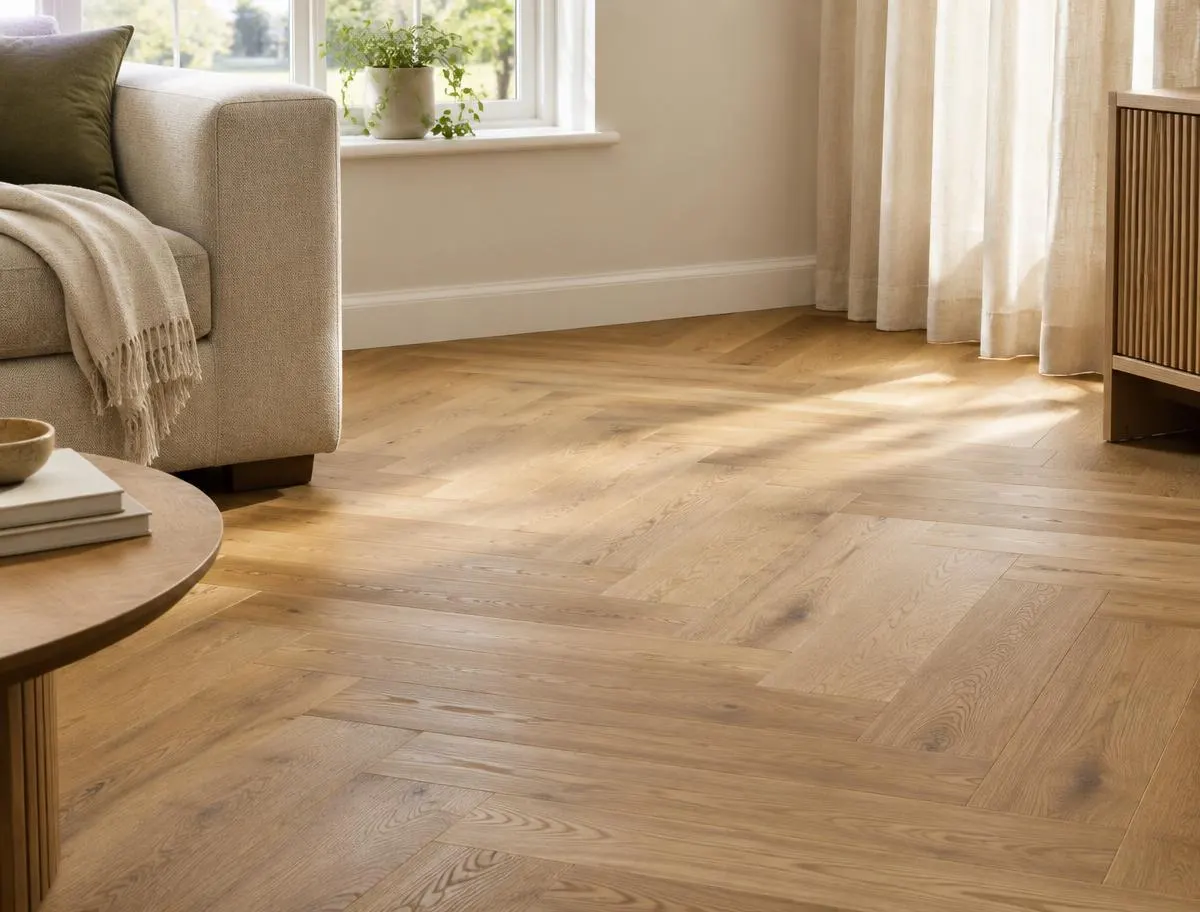
Wood-effect porcelain uses printed grain and surface texture to suggest timber, with the resilience of tile. The Tileanna 2025 brochure shows Tanzania Lindi Honey in a 40×120 plank and Eternal Roble and Teka in 20×120 formats. Those lengths change how the pattern reads across a room: compare several planks together rather than judging one sample.
Real wood has natural variation and can often be refinished, depending on the board and wear layer. It also responds to moisture and temperature changes. Solid and engineered boards are not interchangeable: an engineered board is constructed in layers and may be more suitable for some heated floors, subject to the manufacturer's instructions.
02 / The guide
The comparison that matters in everyday life
Look beyond the first impression and compare how each floor behaves over years, not just on installation day:
- Spills and humidity: porcelain itself resists water; timber can mark, swell or cup if moisture is left standing. Grout and the full tiled assembly still need appropriate care.
- Wear and repair: porcelain is hard-wearing but a cracked tile may be awkward to replace; timber scratches more readily but some boards can be sanded and refinished.
- Heat: tile transfers underfloor heat effectively. For wood, check that the exact board is approved for your heating system and operating temperature.
- Feel and acoustics: timber feels naturally warmer and often quieter. Tile is harder and can feel cold without heating.
03 / The guide
Best rooms for each
For a wet entrance or utility room, porcelain is generally easier to live with. In a bathroom, check the exact product's floor and slip suitability; wood is usually a riskier choice around frequent water. In a bedroom or sitting room, the softer sound and natural texture of timber may be worth its extra care.
An open-plan kitchen-living space is less obvious. If the kitchen sees muddy shoes and spills, you might tile the whole room for continuity, or use timber only in the sitting area. Plan the height difference and threshold before choosing either floor.
04 / The guide
Installation and long-term costs
The shelf price per square metre is not the installed price. Tiling may require subfloor preparation, adhesive, grout and trims; timber may need underlay, moisture checks, expansion gaps and suitable finishing. Ask for an itemised quote based on the real subfloor rather than comparing tile and board prices alone.
For wood-effect tile, dry-lay a few planks to check pattern variation and ask your tiler about staggered layouts. For wood, ask about acclimatisation and the floor's cleaning and refinishing instructions. Either way, keep a few spare pieces from the same batch for future repairs.
05 / The guide
Make the choice in person
Bring measurements and a photo of the room to the Donegal Town showroom. Put a full porcelain plank beside a wood board, look at both in natural light and ask which construction suits your heating and subfloor. Your installer can confirm the final specification before you buy.
Your questions
Frequently asked questions
Are wood effect tiles cold?
Porcelain often feels cooler to bare feet than timber without heating. It transfers heat effectively when paired with a correctly specified underfloor heating system.
Can wood effect tiles go in a bathroom?
Many porcelain wood-look ranges can, but choose a floor tile with an appropriate finish for the wet area and ensure the substrate and waterproofing are correctly specified.
Do wood effect tiles look fake?
Good modern ranges have realistic grain, texture and many plank variations. Seeing a full plank in person is the best test.