
Outdoor Porcelain Tiles in Ireland: The 20mm Patio Guide
Thickness, slip resistance, drainage and the right base matter more than the colour on a sample. Start here before ordering patio tiles.
K.Style Donegal Town · 8 min read
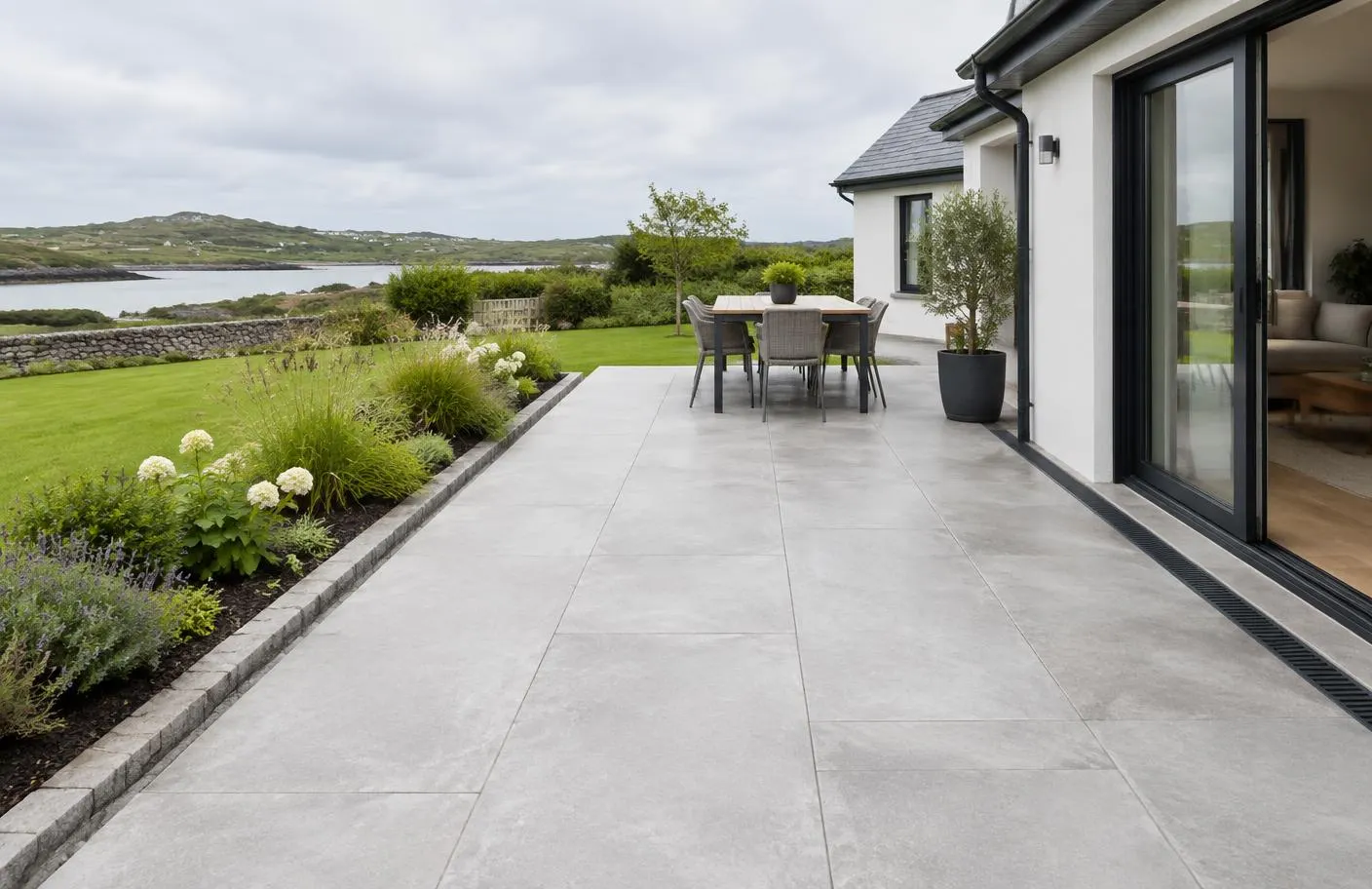
The short answer
For an exposed Irish patio, start with an outdoor-rated, textured porcelain paver and design the drainage before choosing a colour.
01 / The guide
Why consider porcelain instead of stone or concrete?
A patio in Donegal sees long wet spells, wind-driven rain and occasional freezing temperatures. Porcelain's low water absorption is useful here: unlike many porous stones, it does not need routine sealing to resist staining and moisture. But it is not maintenance-free; algae can still grow on dirt left on any outdoor surface.
The important distinction is outdoor-rated porcelain, not just porcelain. An indoor polished tile can be dangerous outside. Check the maker's intended use and slip classification for the exact finish you are buying.
02 / The guide
What to look for in an outdoor tile
Not every porcelain tile belongs outside. Check these four things:
- Thickness: 20mm pavers may suit supported or raised systems, but the permitted installation depends on the manufacturer and the ground beneath them.
- Grip: look for an outdoor-specific textured finish and check its stated slip classification, such as R11. A rating does not remove the need to keep the surface clean.
- Format: 60×90 gives long lines; 60×60 can be easier to plan around smaller patios and changes of direction.
- Edges and thresholds: ask about matching steps or edge details before committing to a layout.
03 / The guide
What 60×90 and 60×60 actually change
A 60×90 paver covers 0.54m²; a 60×60 paver covers 0.36m². That is the nominal tile area, not the number of boxes to buy. A 3m by 4m patio is 12m² before cuts, edges, breakage or steps are accounted for. Box coverage and availability must be checked for the exact product.
The Tileanna 2025 brochure includes 20mm outdoor formats including Durero. Bring your measurements to compare the actual sample and confirm the available colour, finish and specification before ordering.
Worth noting: Do not calculate from floor area alone: steps, borders, cuts and the tile-laying pattern affect the final order.
04 / The guide
Plan the base before the pattern
The correct method depends on the ground and the manufacturer's instructions. A bonded installation, a supported aggregate system and a pedestal system all have different preparation and edge requirements. Ask your installer to specify the build-up, drainage fall, movement joints and treatment at door thresholds before tiles are ordered.
For ongoing care, sweep away leaves and grit, then clean with a product suitable for porcelain. Pay attention to joints and shaded corners where organic debris collects. Do not assume a high-pressure washer is appropriate for every jointing material.
05 / The guide
The showroom conversation
Bring a photo of the patio, its dimensions and a note of any steps or drains. We can compare finishes in person and help narrow down a format; your installer should confirm the ground preparation and installation specification.
Your questions
Frequently asked questions
Are porcelain tiles good for outdoor use in Ireland?
Outdoor-rated porcelain has low water absorption and can be a practical choice for an Irish patio. Check the exact tile's specification, slip classification and approved installation method before buying.
Is 20mm porcelain slippery when wet?
Choose an outdoor-rated textured finish and check the exact product's slip classification. Keep the surface free of algae and leaves; no rating makes a dirty surface slip-proof.
Do outdoor porcelain tiles need sealing?
Porcelain itself usually does not need sealing. Follow the manufacturer's care instructions and check whether the chosen grout or jointing product needs separate care.